
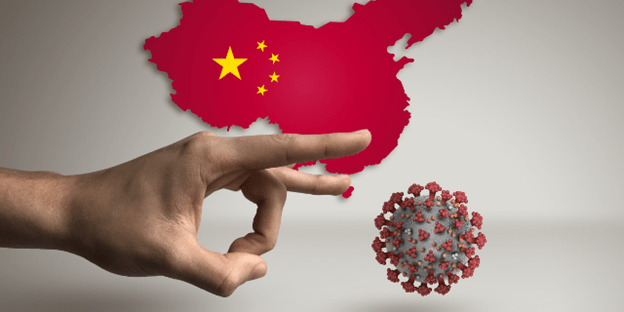
| Regular readers may notice a trend in my recent articles, I am worried about inflation, and I continue to focus on China as a significant contributor to longer-term inflationary risks. As highlighted in Water: An Inflationary Risk to the Global Supply Chain, China is the world’s manufacturing superpower. When we shared this piece in January, we had begun to focus on the longer-term inflationary risks posed by China’s water shortage. This longer-term perspective pre-supposed that the more recent COVID-related supply disruptions were on the path to resolution. What a difference a couple of months can make. Last month, Noah Smith wrote an interesting article, China, Russia, and the inflation situation, focused on renewed inflation fears. In this piece, he explores the inflationary risks posed by the dual impact of Russia’s invasion of Ukraine and the re-emergence of COVID in China. With the more transmissible Omicron variant, the re-emergence has been seen in many countries. By comparison, China did not have an abundance of new COVID cases, but the country had signaled a high level of intolerance to any cases at all. This “zero-COVID” policy initially led to a lockdown in Shenzhen, a flagship Tier 1 city of 17 million people that has a hand in producing 90 percent of the world’s electronics, including toys, televisions, air conditioning units, mobile phones, and drones. The situation has only worsened, and Shanghai is now the largest hotspot. All 25 million residents are under lockdown, with national health care workers and the Chinese military dispatched to boost the city’s response. Another point of risk is that China has rejected the world’s top mRNA vaccines and decided to make its own. Unfortunately, the longer-term efficacy of the Chinese vaccines, CoronaVac & Sinopharm, has come into question. According to Nature, both of these are inactivated vaccines that use the dead SARS-CoV-2 virus and induce a significantly lower antibody response compared to mRNA vaccines. There are also worries that the antibody response may wane more quickly as well. China has seen lockdowns in some of its largest and most export-oriented cities, the efficacy of its COVID vaccines may be waning and citizens have begun to protest. The 5-Year Breakeven Inflation Rate seems to be picking up on the inflationary risks piling up in China and recently spiked to over 3.5 percent. |
 |
| Despite persistent inflation since the summer of 2021, the Federal Reserve has only hiked the Fed Funds benchmark rate once to 0.5 percent. It has become increasingly clear that the Federal Reserve is “behind the curve,” and these macroeconomic disruptions are leading to a stickier medium-term inflationary outlook. As the global COVID pandemic stretches into year three, China’s zero-COVID policy is bearing increasing downside pressure on the Chinese economy and leading to inflationary disruptions to the global supply chain. |
 INVESTED: In Markets, in the Future, and in Society.
Leave a comment